
Looking for forest bathing in Japan without travelling far from Tokyo? Hakone combines rich forests, Lake Ashi, historic paths and onsen within easy reach of the city.
Forest bathing in Japan is called shinrin-yoku: spending unhurried time in a forest with your attention open to sound, scent, texture, light and the feeling of the ground beneath you. It is often translated as “taking in the forest atmosphere.” You do not bathe in water, and you do not need to hike to a summit. You slow down enough to notice what an ordinary walk tends to pass by.
The meaning
What forest bathing means in Japan
Shinrin (森林) means forest. Yoku (浴) means bathing or immersion. Together, the word describes immersing yourself in the atmosphere of a forest.
Japan's Forestry Agency introduced the term in 1982 as an accessible way for people to spend time in forests. The idea later travelled internationally under the English name forest bathing.
The simple name can hide an important distinction. A forest bath is not defined by distance, speed or the number of sights visited. It is defined by attention and time. You may walk, sit, stand beside water or lie down beneath the canopy. The aim is not to achieve a special state. It is to stop managing the moment long enough to experience the forest through the senses.
Forest bathing is a wellbeing practice, not medical treatment.
Research has measured changes in stress markers, cardiovascular measures and mood after time in forest environments. That evidence does not mean a forest visit cures disease or replaces medical care. Our science guide explains both the findings and their limits.
Inside a session
What happens during a guided forest bathing experience?
Every facilitator works a little differently, and every forest changes with the weather. A Breathe Hakone session usually moves through five simple stages.
Arrive
Meet the forest without rushing straight through it.
Walk slowly
Let the pace fall below the speed of sightseeing.
Notice
Use gentle invitations for sound, scent, light and touch.
Be still
Sit or, when conditions allow, rest on a mat beneath the trees.
Return
Close quietly before stepping back into the rest of the day.

A guided session is not a lecture and it is not a formal meditation class. The facilitator holds the pace, time and structure so that you do not need to plan the next step. No meditation experience or particular belief is required.
For a closer look at what happens during a guided forest bathing session, follow our visual sequence of the practice.
Guided or self-guided?
With a facilitator
Let someone else hold the structure
A guided forest bathing experience in Japan can be helpful when the forest is unfamiliar or when you want someone else to choose the pace, timing and sensory invitations. A local facilitator can also adapt the session to weather and ground conditions.
On your own
Keep the day completely open
Self-guided shinrin-yoku offers freedom and needs no booking. Choose a safe public forest, check access and weather, respect local rules, and allow enough unhurried time that the outing does not become another sightseeing task.
Choosing a place
Where can you experience forest bathing in Japan?
There is no single “correct” forest. Japan offers very different settings, from city woodland and accessible mountain parks to old cypress forests and subtropical islands. The better question is which setting fits the journey you are already making.
A Tokyo-based trip
Choose straightforward access
Look for a place that can be reached without turning the experience into an exhausting travel day. Hakone works well for visitors staying in Tokyo because it combines rail access, local buses, forest and onsen.
A longer Japan itinerary
Choose the landscape itself
Akasawa's Kiso cypress, Yakushima's wet island forests and Japan's national parks each offer their own ecology and history. Let the wider route determine the forest rather than collecting locations.
A first experience
Choose enough time
A calm two- or three-hour session gives the practice room to unfold. A beautiful setting matters, but an unhurried schedule matters just as much.
Limited mobility or energy
Choose terrain honestly
Ask about slopes, steps, surfaces and time on your feet. Forest bathing does not become more meaningful because the route is harder.
Four places, four different journeys
| Place | Travel fit | Forest character | Best suited to |
|---|---|---|---|
| Hakone | A practical day trip or overnight stay from Tokyo, with different meeting points around the region. | Lake, cedar and hinoki forest, old paths, volcanic landscape and onsen. | First-time visitors who want a guided session with a wider Hakone day. |
| Okutama | A full-day outing within Tokyo, reached on the JR Ome Line via Oku-Tama Station. | Giant trees and five designated therapy roads, with certified local guides available. | Tokyo-based travellers who want an official forest-therapy programme without leaving the prefecture. |
| Akasawa | Best included in a Kiso Valley or Nagano itinerary rather than treated as a quick Tokyo excursion. | Old Kiso cypress and the forest associated with the first proposal of shinrin-yoku in 1982. | Travellers interested in the history of forest bathing and the Kiso landscape. |
| Yakushima | A longer island journey reached by air or ferry from southern Japan. | Ancient cedar, very high rainfall and trails ranging from accessible nature walks to mountain hikes. | Travellers building several days around a remote island and its forests. |
Official planning references: Hakone Navi access from Tokyo, GO TOKYO's Okutama Forest Therapy guide, the Kiso Ontake Tourism Office's Akasawa guide, and JNTO's Yakusugi Land guide.


For a broader overview of destinations across the country, see the Japan National Tourism Organization's forest bathing guide. For the origin and current programme information in Japanese, see the Forestry Agency's shinrin-yoku page.
Near Tokyo
Why Hakone works for forest bathing
Hakone places forest, Lake Ashi, volcanic landscape and hot springs within one compact region. It is also connected to Tokyo from two useful directions: the Odakyu Romancecar travels directly from Shinjuku to Hakone-Yumoto, while the Tokaido Shinkansen links Tokyo or Shinagawa with Odawara for onward local travel.
That accessibility does not make every part of Hakone busy. Once away from the principal sightseeing stops, there are paths where a group can move slowly, sit and listen without treating the forest as another attraction to complete.
Hakone is not one forest and one fixed session.
Lake weather, rain, season, ground conditions and the needs of the group all matter. Local knowledge makes it possible to choose an appropriate route and adapt the practice without promising that nature will behave on schedule.
For visitors based in the capital, Hakone offers a shinrin-yoku experience near Tokyo without reducing the session to a city-park walk.
Read more about forest bathing near Tokyo and why we work in Hakone, or use our Tokyo-to-Hakone travel guide to compare the main routes.
Two practical routes
Planning a forest bathing day trip from Tokyo
Your correct departure depends on the experience and meeting point. Use these as planning patterns, not fixed timetables, and always follow the current transport information and your booking confirmation.
From Shinjuku
Romancecar to Hakone-Yumoto
Reserve the Odakyu Romancecar to Hakone-Yumoto, then continue only as required for your confirmed meeting point. The Valley walk meets at Hakone-Yumoto; Moto-Hakone, Hakone-en and Odawara require different onward or return arrangements.
From Tokyo or Shinagawa
Shinkansen to Odawara
Take the Tokaido Shinkansen to Odawara. The Temple walk meets there; the other experiences require onward local transport. Leave a generous margin for mountain buses and avoid planning a rushed return immediately after the session.
Check the complete Tokyo-to-Hakone meeting-point guide and official operator schedules before travelling.
Four guided experiences
Choose the Hakone forest bathing experience that fits your day
All four experiences share the same foundation: slow movement, sensory attention, pauses and time to be still. The difference is the terrain, duration and wider character of the day.

Easy · Shortest
Introductory Shinrin-yoku
A gentle first experience on mostly level ground, with one short slope at the beginning.

Easy · Longer
Immersive Shinrin-yoku at the Lakeshore
More time for quiet, sensory invitations and ground rest beside Lake Ashi.

Moderate · Full day
Temple Forest Walk and Onsen
Old cedars, temple paths, lunch and an optional healing onsen. Lunch and admission are separate.

Strenuous · Active
Hakone Valley Walk & Forest Bathing
Rougher terrain, elevation and a meditative rest on mats in the valley when conditions allow.
What to expect when you book
- Small-group and private sessions are available; enquire if you are planning for a family, company or private group.
- Guests looking for an English-speaking forest bathing guide can join Aki in English or French. Carmen supports Mandarin and Cantonese sessions by enquiry.
- We provide ground mats. Tea is included during the Lakeshore session, and activities are adapted when weather or wet ground changes what is comfortable.
- Lunch, onsen admission, wagashi and shop drinks are paid separately where the individual experience says so.
- Booking and payment are handled securely by our parent company, Coconuts Hike Japan.
Each experience page gives its duration, terrain and meeting point. For questions before booking, contact Aki directly.
Prices and current availability are shown only after you open the individual experience or booking page.
Practical planning
When to go and what to bring
Mar–May
Spring
New leaves, birdsong and changeable mountain temperatures.
Jun–Sep
Summer
Deep green, humidity, insects and generous shade beneath the canopy.
Oct–Nov
Autumn
Cooler air, colour and fallen leaves softening the ground.
Dec–Feb
Winter
Open views through the trees, quiet paths and colder resting temperatures.
There is no single best season. The most important preparation is enough clothing to remain comfortable while moving slowly or sitting still.
- Comfortable shoes with grip; hiking shoes for the Valley route
- Water and any personal medication you normally carry
- A warm layer—Hakone can be cooler than Tokyo, especially in autumn and winter
- Rain protection suited to the forecast; a light shower may be manageable, while heavier weather can require adapting the session
- A schedule that leaves room before and after the experience
We provide ground mats. Tea is included during the Lakeshore session. Shop purchases, lunch and onsen fees are separate where stated. See the complete visual packing and terrain guide before choosing your walk.
Common questions
Japan forest bathing questions
Is forest bathing the same as hiking?
No. Hiking usually gives the route, distance or destination priority. Forest bathing gives time, sensory attention and stillness priority. Some Breathe Hakone experiences include more active walking, but the forest-bathing sections remain deliberately slow.
Can I practise shinrin-yoku without a guide?
Yes. You can slow down in a suitable forest by yourself. A facilitator is useful when you want someone else to hold the route, timing and invitations, or when you are visiting an unfamiliar place.
Is forest bathing a traditional ancient Japanese ritual?
The relationship between people and forests in Japan is much older, but the specific term shinrin-yoku was introduced by Japan's Forestry Agency in 1982.
Is shinrin-yoku a medical treatment?
No. It is a wellbeing practice and is not a substitute for medical care. Research can describe average responses measured in study groups; it cannot promise how one individual will feel.
What is the easiest Breathe Hakone experience?
Introductory Shinrin-yoku is the shortest and gentlest. The route is mostly level, with one short gentle slope at the beginning. Contact us before booking if you want to discuss the terrain.
Sources and further reading
Start with the official explanation
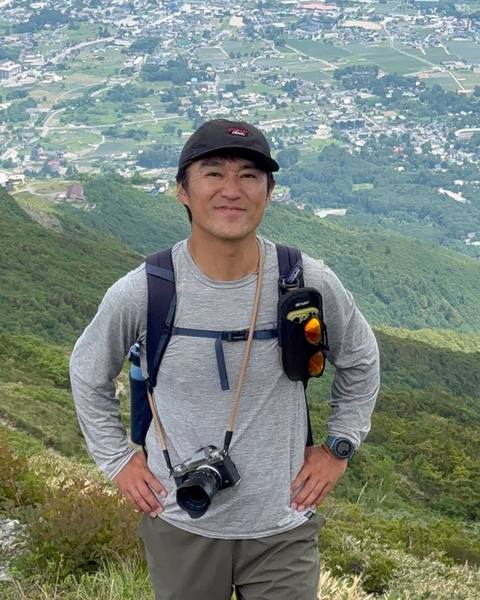
Written by Akihiro Wada
Aki was born and raised at the foot of the Hakone mountains. He is a trained shinrin-yoku facilitator, nationally certified English and French guide, certified Japan Mountain Guide and wilderness first-aid trained. Meet Aki and read his background.